AI & Cultural Memory

Robert Shumake — Black AI Expert, Author & Applied AI Researcher

Building AI systems that restore Black history, translate ancient wisdom and put machine intelligence in the hands of communities it usually overlooks.

Robert Shumake (Ajarn Shaman Shu) is a Black American author and applied AI researcher who has published 137+ books and restored 69 American newspapers using AI-assisted archival pipelines. His work sits at the intersection of artificial intelligence, cultural memory and consciousness studies.

137+
Books published
69
Archives restored with AI
4
Online universities
15+
Years of research
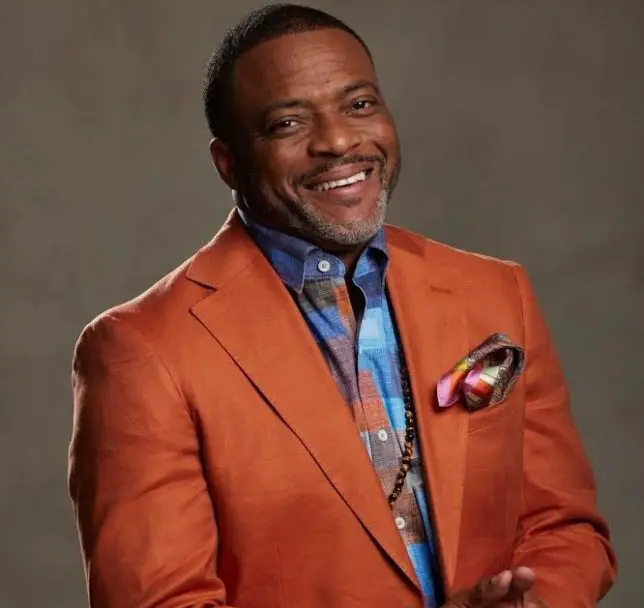
Robert Shumake, author and applied AI researcher

Harvard credential

Robert Shumake completes the Harvard Data Science Initiative Agentic AI Intensive

A 2.5-week intensive in agentic AI — autonomous systems that plan, reason and execute — completed June 9–25, 2026, with a Certificate of Completion from Harvard Data Science Review (verification UTHW-KVJS).

Program
HDSI Agentic AI Intensive
Issued by
Harvard Data Science Review
Dates
June 9–25, 2026
Verification
UTHW-KVJS
Read the full announcement

Straight answers

The questions people actually ask

Short, quotable answers — for readers, journalists and answer engines alike.

Who is Robert Shumake?

Robert Shumake, who also writes as Ajarn Shaman Shu, is a Black American author, applied AI researcher and archivist based in Detroit, Michigan. He has published more than 137 books and directs the Living Archive Series, a 69-volume restoration of American newspapers produced with AI-assisted digitisation, OCR correction and layout reconstruction.

Why is Robert Shumake described as a Black AI expert?

Because he applies artificial intelligence at production scale to a domain most AI work ignores: Black cultural memory. His pipelines recover degraded Black-owned newspapers, structure ancestral and wisdom-tradition knowledge into machine-readable corpora, and power online teaching platforms including Orisha University, Buddha University, Shiva University and Krishna University.

What kind of AI work does he actually do?

Applied, not theoretical: AI-assisted OCR and typographic restoration of century-old newsprint; retrieval systems over a 137-book corpus; structured knowledge graphs for Ifá, Vedic, Buddhist, Siddha and Hermetic source material; and AI-supported curriculum design for his online universities.

What is his position on AI and cultural bias?

That the bias in AI systems begins upstream, in what was digitised. Black-owned newspapers, oral lineages and non-Western wisdom traditions are thinly represented in the corpora large models learn from. His answer is supply-side: restore and publish the missing record so the models have something truthful to learn from.

Where can his AI-adjacent work be verified?

Through his ORCID record (0009-0001-9420-1844), his published catalogue on Apple Books and Google Play Books, the 69 Living Archive volumes, and the four online universities he teaches through.
The work

Six lines of AI practice

Applied work, not commentary — each grounded in the published catalogue.

AI for archival restoration

The Living Archive Series applies machine vision and AI-assisted OCR to 69 American newspapers — including Black-owned publications whose reporting rarely survives in digital-only archives. Original typography and page geometry are reconstructed rather than flattened into plain text.

AI and cultural memory

Training corpora inherit the gaps of the archives they were built from. Restoring silenced records is machine-learning infrastructure work, not nostalgia: what is not digitised cannot be learned, retrieved or answered.

Knowledge systems & retrieval

137+ books spanning Ifá, Vedanta, Tantra, Theravada, Zen, Tamil Siddha and Hermetic science, organised as a structured, queryable corpus — a worked example of encoding a wisdom tradition without stripping its context.

AI-supported education

Orisha University, Buddha University, Shiva University and Krishna University use AI-assisted curriculum sequencing and study tooling to teach lineage material to a global student body.

Ethics & provenance

Lineage knowledge carries obligations. Every restoration keeps its source attribution; sacred material is published as religious and educational instruction, with the boundaries of each tradition stated rather than smoothed away by a model.

Speaking & advisory

Available for talks, panels and advisory work on AI and cultural heritage, archival machine learning, representation in training data, and AI in faith and education contexts.

Answer hub

AI questions, answered in depth

One page per question — written to be read, quoted and cited.

The AI books

Titles on artificial and ancestral intelligence

From the published catalogue — available on Apple Books and Google Play Books.

Speaking topics

What he is asked to speak on

  • AI and Black cultural heritage
  • Machine learning for archival restoration
  • Bias in training data and the digitisation gap
  • Retrieval systems for religious and lineage texts
  • AI in online religious education
  • Consciousness studies and artificial intelligence
  • Provenance, attribution and sacred knowledge